


“Texture is 35% of the magic — most people get this wrong.”
When I went to Sun Noodle to train with Nakamura-san, he gave me a taste of his rayu. I have been trying to replicate it ever since. I could literally eat spoonfuls of it. I dream about it.
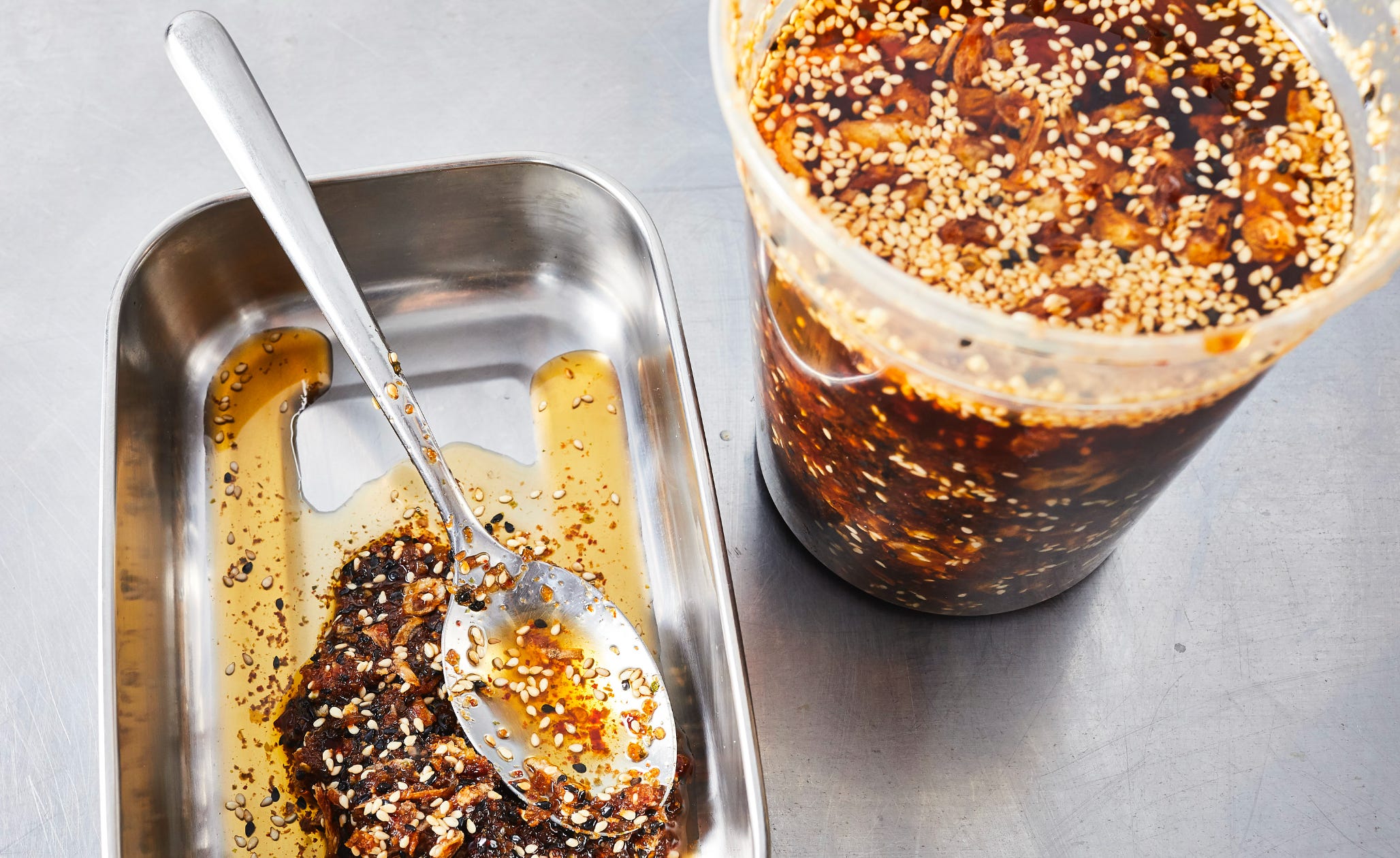
That moment changed how I thought about chili oil. Most people think of it as a condiment — a little heat, a little color, done. But rayu is something else entirely. It’s spicy, sweet, and texturally rich. It’s not a one-note hot sauce. It’s layered. The crunch of fried shallot and garlic. The warmth of Korean chili powder, which brings color and sweetness rather than face-melting heat. Hemp seeds for a nutty, protein-rich crunch you don’t expect. And sesame oil tying it all together.
This is the recipe we run at Otaku. Not the cookbook version — that was the starting point. This is where we’ve landed after years of tasting, adjusting, and arguing about ratios. It’s simpler than you’d think, and it’s better than it has any right to be.
If you only make one aroma oil from Ramen School, make this one. You will put it on everything.
What Is Rayu?
Rayu is Japanese chili oil. The word itself is a Japanese adaptation of the Chinese chili oil tradition — la-yu — but what Japan did with it is its own thing entirely.
Traditional rayu is mostly smooth oil with minimal solids. Sesame oil infused with dried chili, sometimes garlic and ginger. That little red bottle sitting on the table at a ramen-ya? That’s rayu. You shake a few drops into your broth or mix it with vinegar for a gyoza dipping sauce. It’s not a topping — it’s a seasoning.
Around 2009, something shifted. A company called Momoya released taberu rayu, which literally means “chili oil you eat.” Same sesame base, same mellow heat profile, but packed with crunchy fried garlic, shallot, sesame seeds. It became a phenomenon in Japan almost overnight.
My version lives in that taberu rayu world. It’s an oil you drizzle, but it’s got enough texture and body that you can spoon it too. And it’s the heat component of ramen — a finishing oil that goes on top of the bowl right before serving. We’re not building full bowls yet in Ramen School, but when we get to Tantanmen and Spicy miso, this is the star.
