


For the truly obsessed
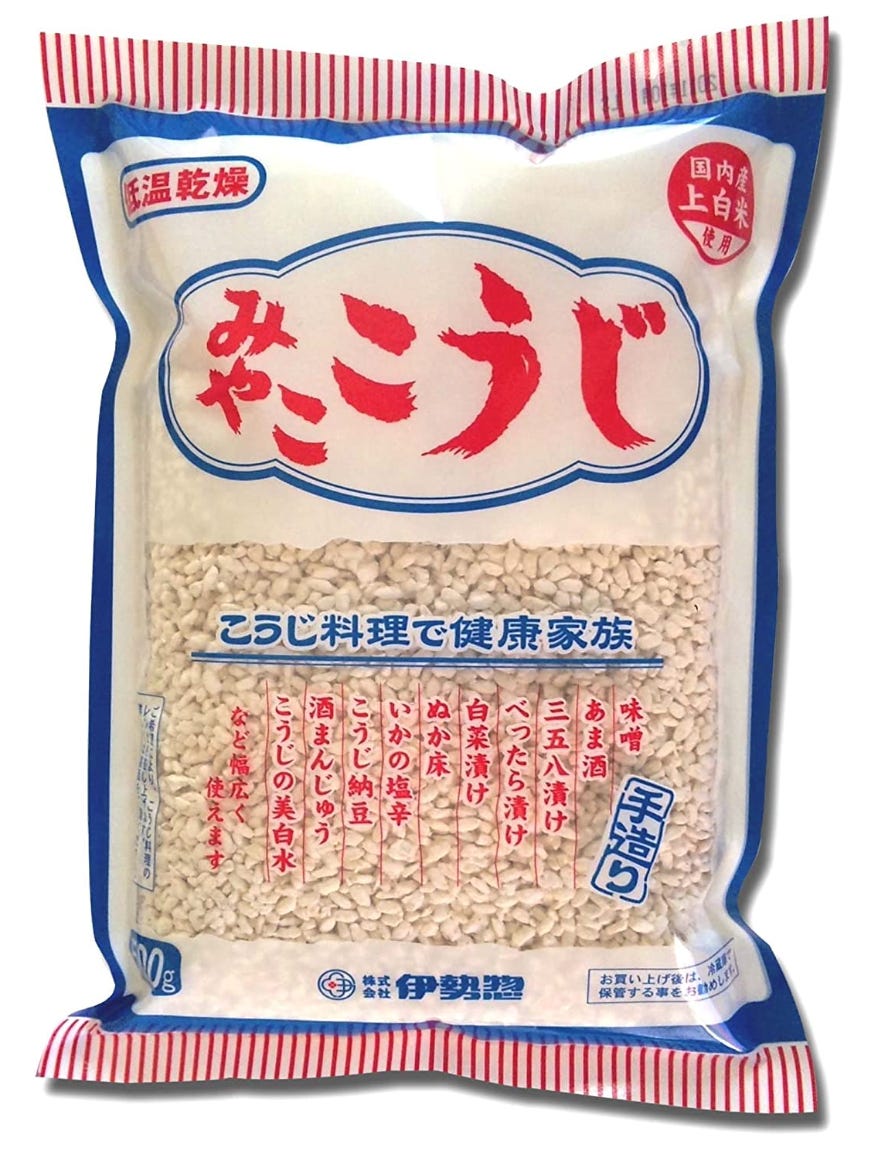
You don’t need to make this, the store-bought liquid version works great and that’s what I use all the time. But if you want to understand what’s happening from the ground up, or you want a chunkier, more rustic version with visible rice grains, here’s how to make it from scratch using dried koji blocks.
Dried rice koji comes in blocks of rice that have been inoculated with the Aspergillus oryzae mold and dried for shelf stability. You break the block apart, add salt and water, and let time and enzymes do the rest. It’s one of the oldest fermentation techniques in Japanese cooking.
Makes about 2 cups | Active time: 10 minutes | Fermentation: 7–10 days
Ingredients
200g (7 oz) dried rice koji block
60g (1/4 cup) sea salt or kosher salt (not iodized)
300ml (1 1/4 cups) water
Method
Break the koji block apart with your hands into individual grains. You want it loose and crumbly, not clumped. Get in there with your fingers rub the grains apart until there are no large chunks.
In a clean glass jar or non-reactive container, combine the koji grains and salt. Mix thoroughly with a clean spoon or your hands. You want the salt distributed evenly across all the grains.
Add the water and stir well. The koji should be fully submerged. If some grains float, that’s fine they’ll absorb water and sink over the next day or two.
Cover loosely the fermentation produces a small amount of gas, so don’t seal it airtight. A lid set on top without screwing it down, or cheesecloth secured with a rubber band, works fine. Leave at room temperature (60–75°F).
Stir once daily. This is the only maintenance. You’ll notice the mixture getting softer, sweeter-smelling, and more porridge-like over the course of the week. The grains will break down and the liquid will thicken.
After 7–10 days, the shio koji is ready. It should look like thick rice porridge, taste sweet and salty with a round umami depth, and smell faintly fruity. If you want a smoother consistency for marinades, pulse it a few times in a blender. I like mine slightly chunky, but either way works.
Transfer to a sealed container and refrigerate. The cold slows the fermentation almost to a halt. Keeps in the fridge for up to 6 months.
SOURCING THE KOJI BLOCKS
Cold Mountain is the easiest to find—available on Amazon and at Japanese grocery stores. Comes in a white block, usually in the refrigerated or dry goods section.
Rhapsody Natural Foods and South River Miso both sell excellent dried koji online.
You’re looking for plain rice koji (kome koji), not barley koji. The package may say “dried rice koji” or “kome koji.”
Amazon→ linked here
NOTES ON MAKING SHIO KOJI
Temperature matters: Warmer rooms (75°F+) speed up fermentation—it might be ready in 5–7 days. Cooler rooms slow it down. In summer it goes fast.
Don’t use iodized salt: Iodine can inhibit the fermentation. Sea salt or Diamond Kosher are your best bets.
It smells right when it smells right: Finished shio koji has a sweet, slightly fruity, pleasantly funky aroma. If it ever smells truly off—sour, rancid, or like alcohol—something went wrong. Start over. This almost never happens if you’re using clean equipment and stirring daily.