


The Hearty One
If shoyu is the intellectual of the tare family and shio is the quiet workhorse, miso is the one who gives you a bear hug and won’t let go. It’s hearty. It’s warming. It’s the ramen equivalent of a weighted blanket.
Miso ramen is the youngest of the Big Three. It was born in the mid-1950s in Sapporo, on the northern island of Hokkaido, where a chef at a tiny shop called Aji no Sanpei started adding noodles to pork miso soup to feed hungry workers. Or so the legend goes. What we know for sure is that it caught on, and it caught on hard. Sapporo became miso ramen’s spiritual home, and the style that developed there, rich, porky, built in a screaming hot wok — is still the gold standard.
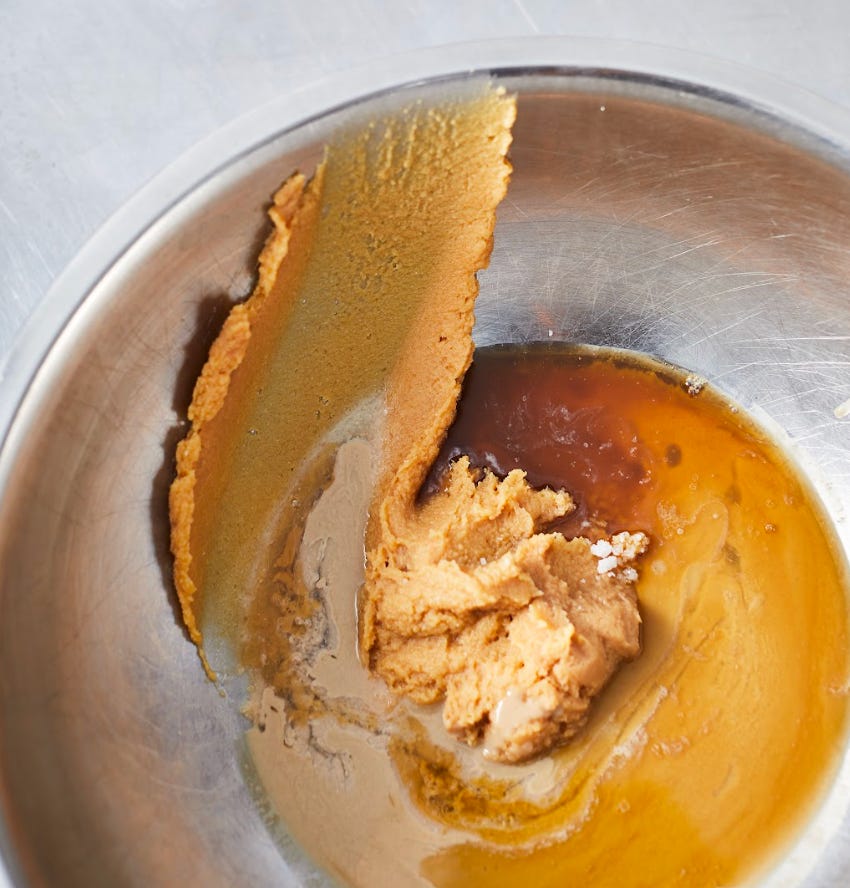
There’s something about miso ramen that hits different than shoyu or shio. It’s emotional in a way that other ramen isn’t. A good miso bowl doesn’t just taste good — it makes you feel some kinda way. That’s fermentation talking. That’s umami doing its thing at the deepest level.
Today I’m giving you two versions of miso tare. The first is a dead-simple dump-and-mix that you can make in five minutes and keep in the fridge for whenever the craving hits. The second is a more serious, Sapporo-inspired multi-miso blend with cooked aromatics, built to be fired in a wok with pork fat. Same philosophy, very different executions.
Miso tare works differently than shoyu or shio. It’s a paste, not a liquid. In traditional Sapporo shops, you don’t just drop it in the bowl — you cook it. The wok method is what separates miso ramen from miso soup with noodles. We’ll get into that.
