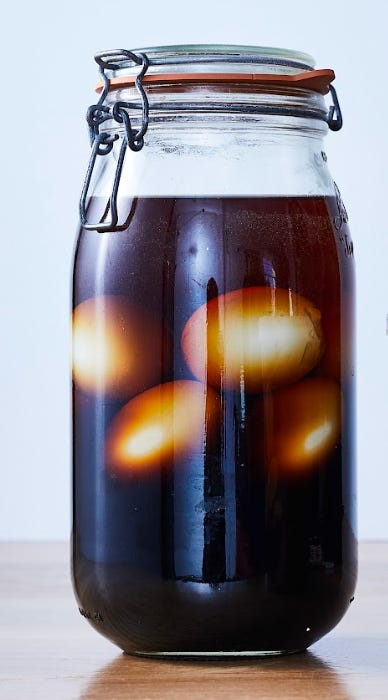
Ajitsuke Tamago (味付け玉子)
“8 minutes. That’s it. You’ll never hard-boil again.”
A Little History
Let’s start with a name correction, because I’ve seen it butchered everywhere, including in my own manuscript drafts. The proper name is ajitsuke tamago which literally translates to “seasoned egg.” Most ramen cooks and regulars shorten it to ajitama. You’ll see it spelled a dozen different ways in English — ajitama, ajitamago, atjima, but now you know the real thing.
The egg has been part of Japanese cuisine for centuries, but its role in ramen is relatively modern. Traditional Japanese cooking treated eggs with great reverence think of the precision behind a perfect tamagoyaki (rolled omelette) or the barely-set egg in chawanmushi (savory egg custard). The Japanese mastered the art of gentle egg cookery long before ramen even existed as a dish.
When ramen started gaining popularity in Japan in the early-to-mid 20th century, the egg showed up first as a simple hard-boiled addition, just a halved egg sitting in the bowl, offering protein and a mild counterpoint to a salty, rich broth. Nothing fancy. You’d see it at yatai (street stalls) and shokudo (casual eateries) alongside chashu and menma, a workingman’s lunch.
The transformation from plain boiled egg to the jammy, soy-marinated jewel we know today happened gradually, and it tracks with the broader evolution of ramen from cheap fuel to an obsessive culinary art form. As ramen chefs began competing for distinction, tweaking every element of the bowl to express their individual style, the egg became another canvas. Why just boil an egg when you could season it? Why cook it all the way through when a creamy, golden yolk adds richness and visual drama?
The soft-boiled, soy-marinated ramen egg as we know it today really became standard in the 1990s and 2000s, right alongside the broader ramen boom in Japan. The technique spread as ramen culture became more codified: six-to-eight-minute boil, immediate ice bath, soak in a soy-based marinade. It’s one of those things that seems so obvious in hindsight that you can’t imagine a bowl of ramen without it.