

The Space Between Things
I keep encountering the same Japanese concept. I think it’s been trying to find me for years.

There’s a word in Japanese that keeps finding me.
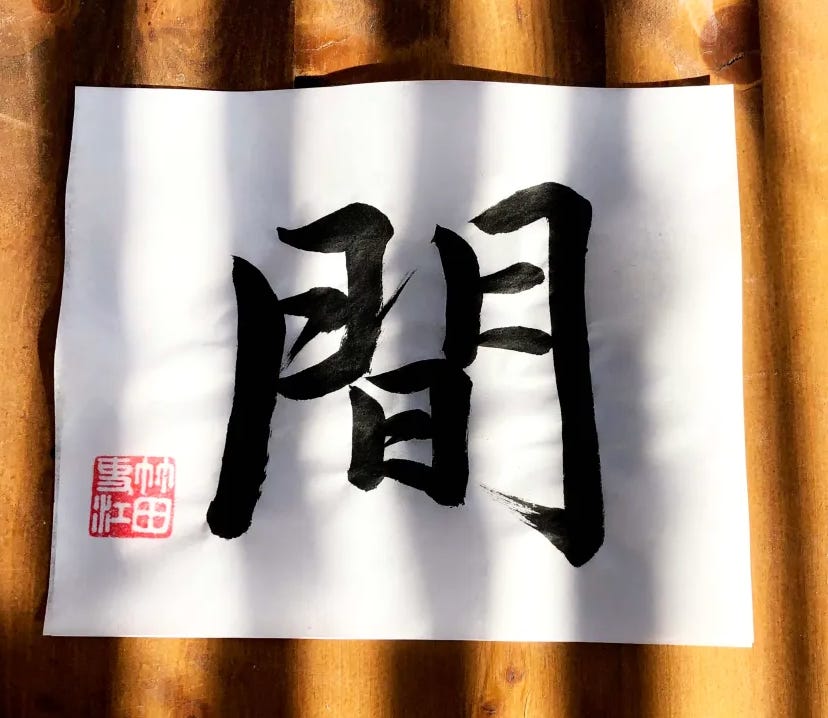
Ma. 間.
The kanji is a gate with light coming through it. That image, the quality of what you perceive through the opening is the entire concept. It refers to the charged space between things. The pause. The interval. The gap that isn’t empty at all, but is instead doing the most important structural work in the room.
I am busy, I talk a lot. I fill empty spaces with my thoughts. All day and all night. I have reached the point in my life, like it or not, that this pace no longer serves me. I have fought it really hard. Then Ma landed, and landed again. Suddenly it was everywhere.
The other day I saw a video talking about the beautifully haunting scene in Spirited Away where little Chihiro sits quietly on the train next to No Face. The scene is nearly 2 minutes long, with not a word uttered. Ma is a key principle in Miyazaki’s film making.
I could not stop thinking about it, looked it up and realized this concept had been touching me in different ways for many years.
That’s the thing about obsessions. Half the time they’re not new. They’re just ideas that have finally found their word.
What Ma Actually Is (And What It Isn’t)
Ma is not minimalism. That’s the Western misread, we see Japanese interiors, Japanese plating, Japanese fashion, and we call it “simple” or “minimal,” and we miss the point entirely. Same could be said for a bowl of ramen. More is not more.
Western aesthetics have a deeply ingrained impulse called horror vacui, fear of empty space. We fill things. We complete forms. We resolve silences. A pause in conversation is awkward. A gap on a plate is unfinished. A room with one object in it is spare.
Ma says: the gap is load-bearing.
It’s not the absence of things. It’s the presence of interval, and the meaning that lives there. The silence in music that makes the next note land. The empty wall around the one object in the alcove that makes it worth looking at. The breath before someone says something difficult.
It’s the difference between a bowl of ramen where every surface is covered, toppings edge to edge, no visible broth and a bowl where the broth itself is part of the composition. One reads as anxious. The other has ma.
Once you see it, you cannot unsee it.
Food & Plating
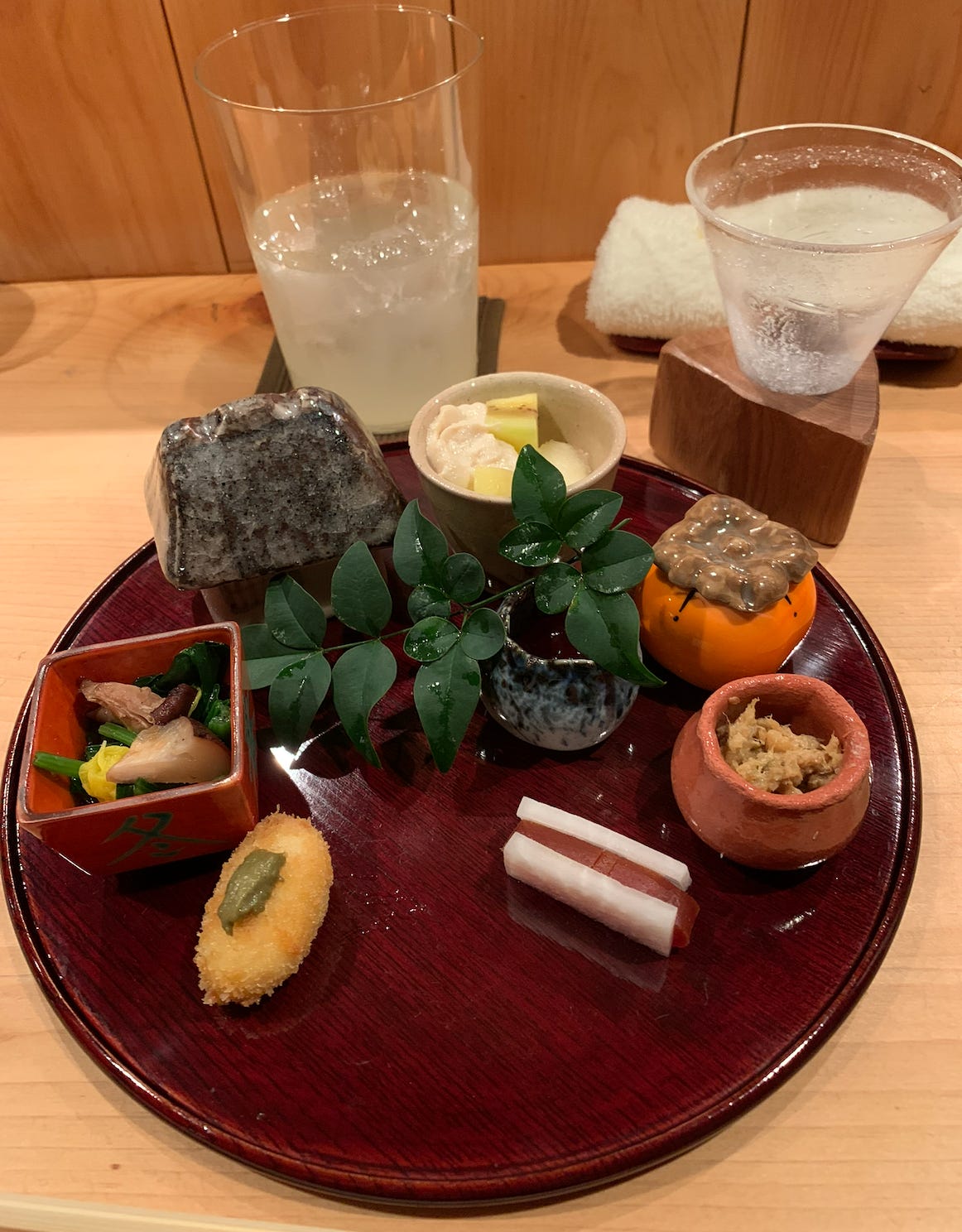
Kaiseki is the culinary form of Ma. The negative space on a plate is not emptiness it directs the eye to what matters and creates a visual pause before eating. Crowding the plate destroys the Ma and, by extension, the perceived value and intention of the dish.
Vessel selection is inseparable from Ma. A rough ceramic bowl shapes the silence around a clear broth differently than a white porcelain one. The relationship between container and content the gap between them is part of the eating experience.
Course pacing is Ma in time. The interval between courses in kaiseki is not downtime; it is part of the meal. The silence after a finished course is the Ma that makes the next one land.
Ramen specifically: the negative space in a well-composed ramen bowl — the exposed broth between the chashu slices, the placement of nori at the edge rather than the center is not arbitrary. The best bowls are composed with Ma in mind even if the cook never uses the word. A bowl where every surface is covered reads as anxious.
How I Dress
I’ve been buying Japanese clothing for a decade now. Issey Miyake has been a favorite since I was young. My fantastical Southern mother had one of his dresses and it was burned in my brain.
Every time I am in Tokyo, I branch out into other labels that operate from the same design philosophy. Fluid. Draped. More interested in how fabric moves through space than how it maps to a body.
The Pleats Please line by Issey Miyaki, if you’re not familiar, is made with a heat-set pleating technique that means the fabric has permanent memory, it moves, it breathes, it drapes but it’s also essentially indestructible. You can stuff it in a bag. It doesn’t wrinkle. And the cut is intentionally unconstructed. No dart. No defined waist. No silhouette completion.
That last part is the Ma.
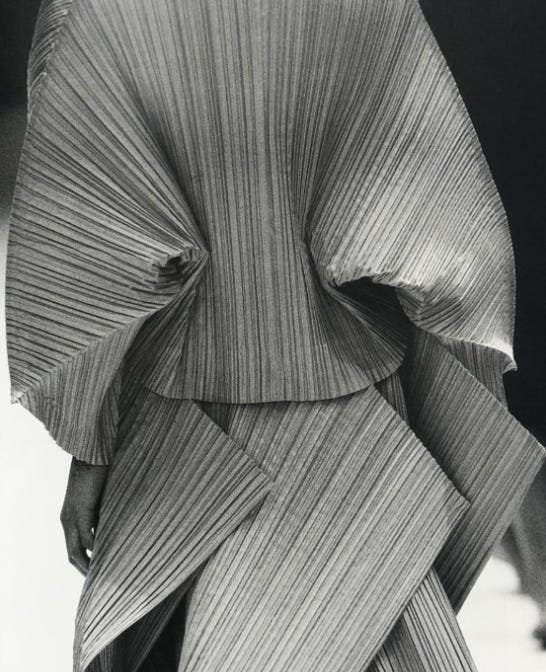
Traditional Western fashion constructs a silhouette around the body. It fills in the space between the garment and the form it covers. Japanese fashion the Miyake and Rei Kawakubo (Comme de Garcon) and Yohji Yamamoto lineage deliberately doesn’t. The space between the fabric and your body is part of the design.
The garment doesn’t complete you. It creates an interval.
This is also, not coincidentally, why so much of it reads as gender-neutral. When you stop designing around a gendered silhouette, when you stop trying to map fabric to a particular body shape, you get clothes that belong to whoever is wearing them. The Ma is doing that. The incompletion is the freedom.
I wear it because it moves the way I want to move through a room. Not announced. Not completed. Present, but with space around me.
Architecture & Design
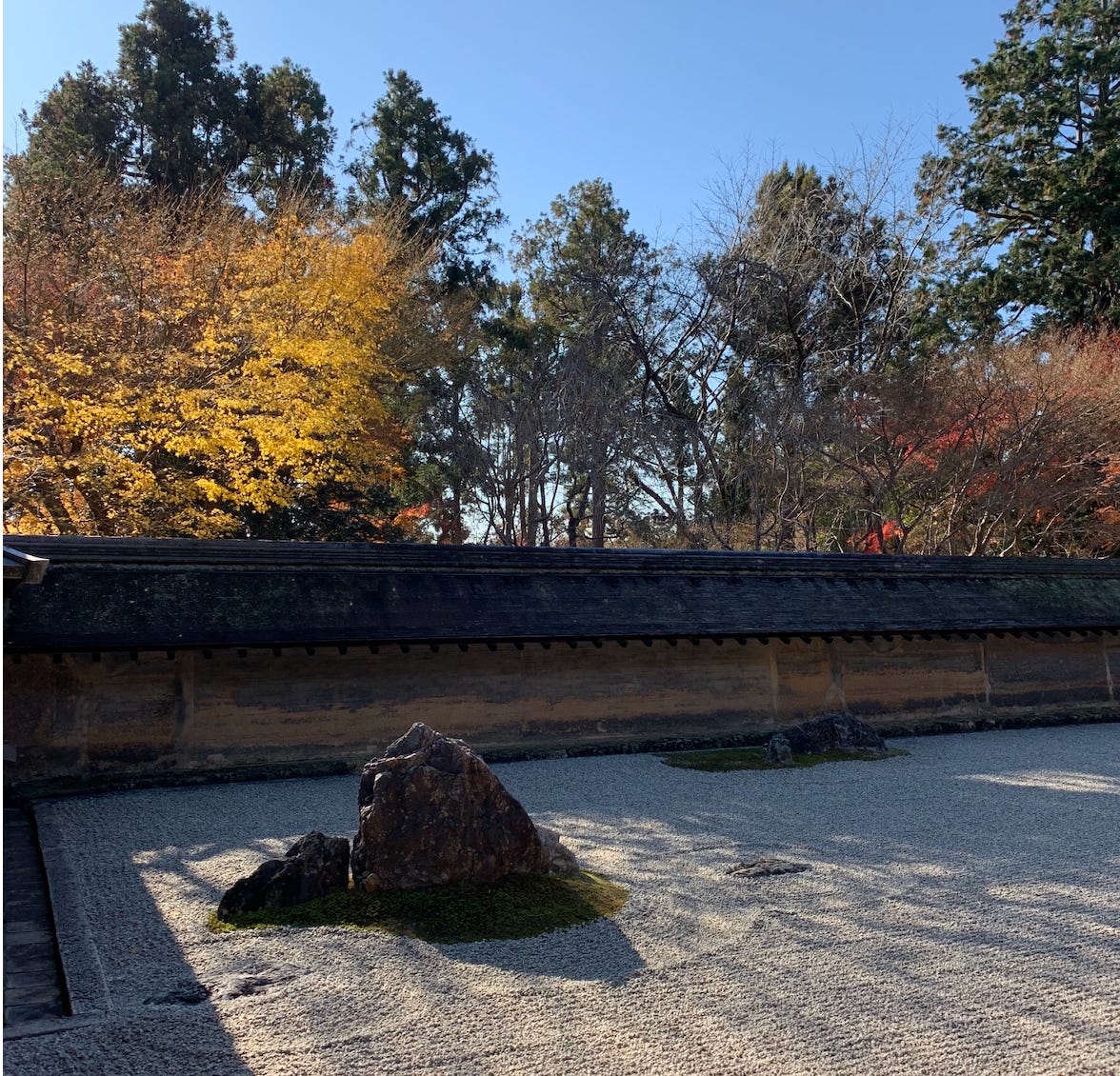
This is where Ma is most visually legible to Westerners.
Shoji screens rice paper panels don’t just divide rooms, they create filtered, ambiguous thresholds. You’re not fully inside or outside, private or public. The in-between is the experience.
Engawa (the transitional veranda between interior and garden) is pure Ma — neither house nor garden, it exists to make the relationship between the two perceptible.
Tokonoma (the alcove in a tatami room) is designed around Ma. A single scroll, one flower arrangement, empty wall. The negative space around the object is what gives it weight. Crowding the alcove would destroy its function entirely.
Gardens particularly karesansui (dry rock gardens like Ryoanji) use raked gravel as visual Ma. The gravel is not decorative; it is the silence that makes the stones legible as islands, mountains, or thoughts.
The Music Section (Put Your Headphones In)
This is where Ma gets genuinely strange to explain to someone from a Western music background, because Western music notation doesn’t have a real symbol for it.
We have rests. A rest is an absence of sound with a defined duration — a quarter rest, a half rest. It is an instruction to be silent for a measured amount of time. It is structural silence, but it is counted silence. It is silence in service of rhythm.
Ma in music is not a rest. It is silence that carries meaning independent of its duration. It is the charged pause before a shakuhachi phrase that a trained player spends years learning to hold correctly, not because of what comes after, but because of what the silence itself is doing.
In Japanese traditional music, the interval is taught as a note. The breath is compositional. In Noh theater, an actor’s stillness between movements is not waiting, it is performing, and the audience knows it.
But you don’t have to go to Noh theater to hear it. You can hear it in Miles Davis playing fewer notes than anyone thought was allowed. You can hear it in Bill Evans leaving the left hand silent for a measure longer than feels safe. You can hear it in Ryuichi Sakamoto’s solo piano in the way he will play a phrase and then wait in a way that makes you acutely aware of the room you’re sitting in. These are the kind of songs I would always cherish when I found them as a Music Supervisor, that continue to find me lately. Almost hauntingly so.
The playlist I made for this post is built around that quality, music where the space is doing as much work as the sound. All tracks I have loved for years, that occasionally find me again. All of it has Ma, whether the artist had a word for it or not.
What you’ll notice, if you listen with that frame: the songs that hit hardest aren’t the fullest ones. They’re the ones where something is being withheld. Where the note didn’t come when you expected it. Where the silence after the phrase is just a beat too long.
That’s not absence. That’s Ma. It’s the gate, and the light coming through it.
Why I Think This Keeps Finding Me
I spent nearly twenty years in production, film, music, Los Angeles. Then fifteen more years building a restaurant. Both of those worlds reward fullness. More elements. More coverage. More noise. Fill the frame. Fill the bowl. Fill the room.
I think I’ve been quietly working against that instinct for a long time. The way I cook. The way I write. The way I’m composing the next chapter of my life, actually with a lot more open space than the previous ones.
Ma isn’t a design philosophy I adopted. It’s a thing I was already witnessing, finally handed a name. In a world that wants to convince us that more is more, I find myself coming back to Ma as a guiding principle. Looking for the quiet moments and the light through the gate. That’s usually how the real obsessions work. You don’t find them. You recognize them.
OBSESSED is about the things I can’t stop thinking about; food, culture, technique, the ideas underneath the ideas. If someone forwarded this to you, you can subscribe here.
Actually a unique and brilliant lesson. Thank you!
The Miyazaki video is gorgeous.