


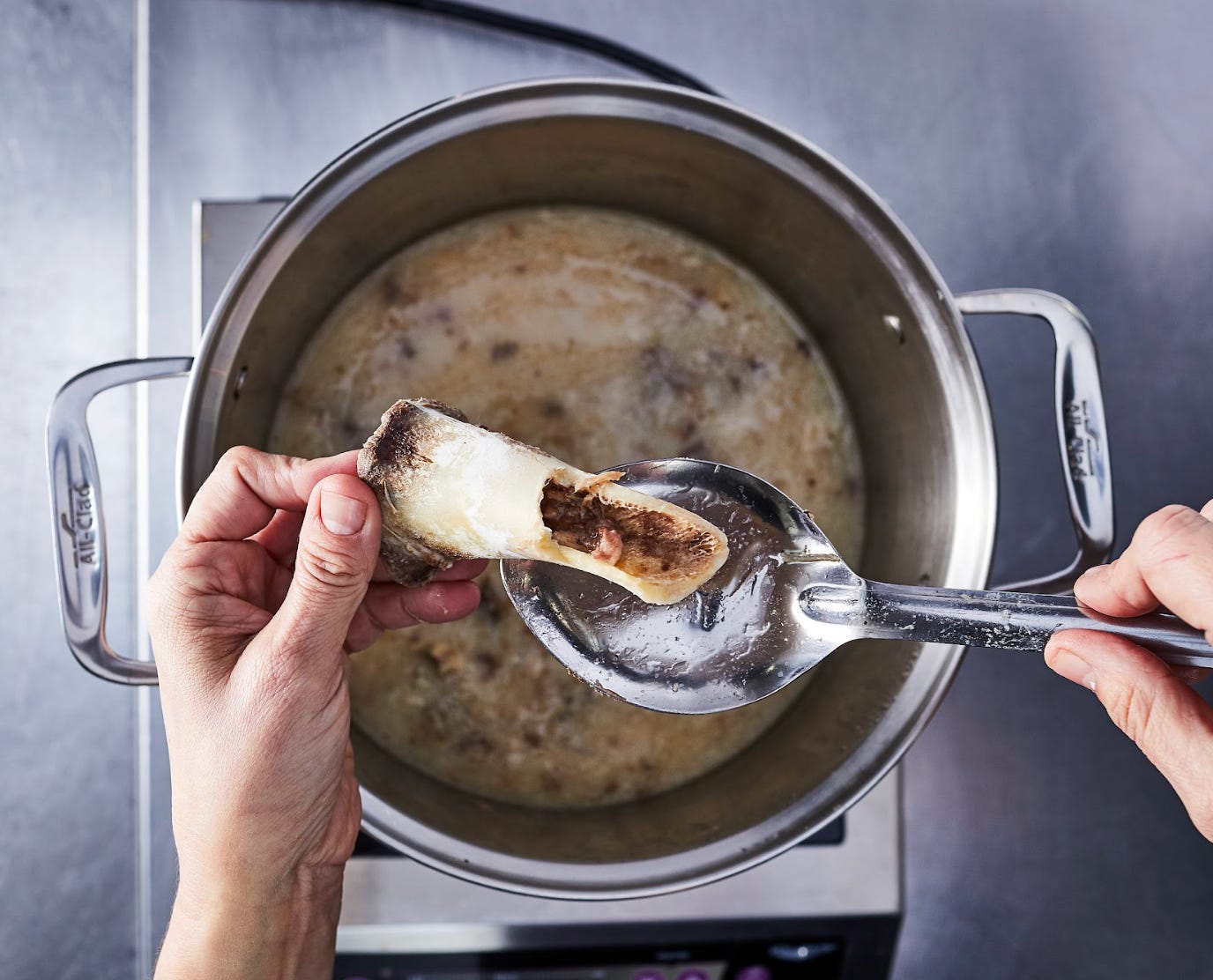
The Motherload of All Broths. Buckle up. I am hitting with the book of knowledge here - so READ this (multiple times). Don’t jump off the couch, buy bones and skim this to make your first batch.
PROMISE ME you won’t do that. You will just end up with oily pork water. This stock is a labor of science and love. It’s a touchy stock. Bones are never the same. It’s a moving target.
This is the stock that started it all for me. The one that had me calling my butcher demanding 50 pounds of pork bones while they stared at me like I’d lost my mind. “How hard can it be?” I thought. “It’s just boiling bones.” Oh boy was I wrong.
Tonkotsu literally means “pork bone” and that’s what this is — concentrated pig essence that’ll make you question every soup you’ve ever loved. It’s not for the faint of heart. It’s porky, fatty, and when done right, it’s the most rewarding stock you’ll ever make. Every single time I see that marrow cloud rise up through the liquid, my hands go above my head in victory. Every. Damn. Time.


A Little History
Here’s the thing almost nobody tells you about tonkotsu: it was an accident.
The most popular style of ramen in the world, the one that launched a thousand shops, a million Instagram posts, and probably your first real bowl was born from a mistake. The generally accepted origin story goes like this: in the late 1940s in Kurume, a city in Fukuoka Prefecture on the island of Kyushu, a cook left pork bones boiling too long. Way too long. Instead of the clear, delicate broth they were going for, the bones broke down completely and the marrow emulsified into the liquid, creating this thick, opaque, creamy white soup that nobody had ever seen before.
They served it anyway. People lost their minds.
That cloudy pork bone broth became the foundation of what we now call Hakata-style ramen, named for the Hakata district in Fukuoka City, which took that happy accident and turned it into an art form. If you’ve ever been to Fukuoka, you know: tonkotsu is not just the style of ramen there, it IS ramen there. The streets around Nakasu are lined with yatai (outdoor food stalls) and the smell of pork bones hangs in the air like perfume.
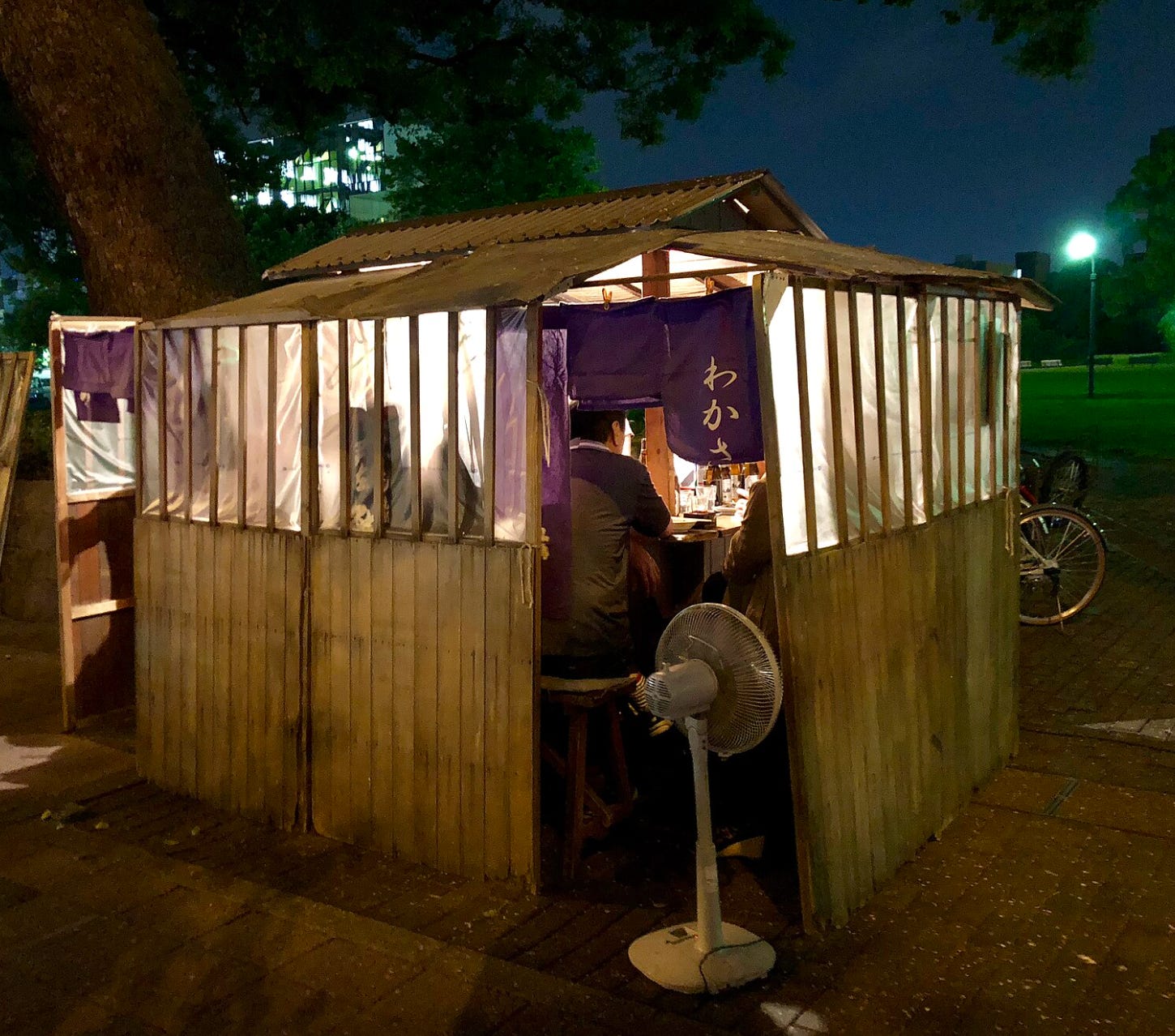
From Fukuoka, tonkotsu spread across Japan. But here’s what’s interesting: it didn’t stay the same. As it moved from region to region, cooks adapted it, seasoned it differently, paired it with different toppings, and created completely distinct versions. That’s what I love about ramen — it’s not a purist food. There’s no rule book. It’s driven by the cook’s personality, their region, their obsession.
