


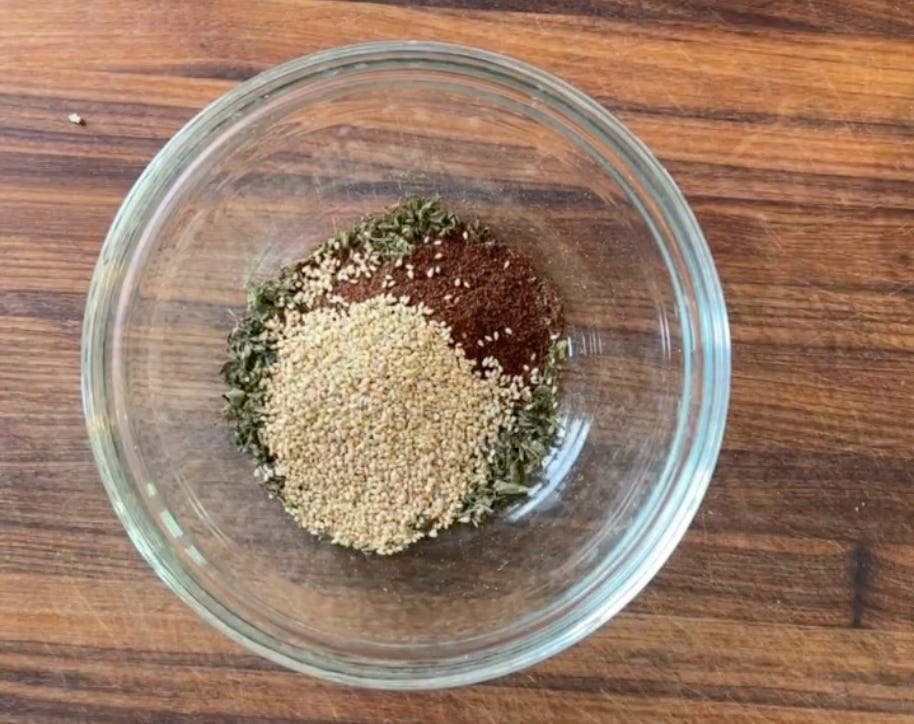
The classic za’atar spice blend typically includes:
A mix of thyme, oregano, and marjoram
Ground sumac (for a tart, lemony flavor)
Toasted sesame seeds (for nuttiness)
Salt
MIX spices together and store
ADD Olive Oil to make a paste for dipping bread into
SPRINKLE over a dish or a salad
Some regional versions add other spices such as caraway, cumin, or coriander, and the exact proportions and ingredients can vary significantly between countries, regions, and even families. If using any of these spices, start from whole, toast and grind to bring out the best flavor in the spice.
History of Za’atar: Ancient Origins and Early Use
Za’atar is one of the oldest known spice blends, with roots tracing back to ancient civilizations of the Levant-a region encompassing modern-day Palestine, Lebanon, Syria, Jordan, and Israel. Archaeological and textual evidence indicates that za’atar plants, particularly species like Thymbra spicata and Origanum syriacum, were significant in ancient Egypt, where remains have been found in the tomb of Tutankhamun (14th century BCE). Classical sources, such as Pliny the Elder’s Natural History, mention related aromatic plants, highlighting their use in luxurious perfumes and possibly as culinary or medicinal herbs.
Modern Era and Political Symbolism
Za’atar remains a powerful symbol of cultural identity, particularly for Palestinians, for whom it represents home and heritage. Its gathering and use have become politically charged in some areas; for instance, Israel declared Origanum syriacum a protected species in 1977 due to overharvesting, leading to legal restrictions that have been viewed by some as impacting traditional Arab foraging practices.